Introduction
Choosing the Best Orthopedic Dog Ramps for Beds and SUVs: Preventing Joint Strain in Senior Dogs can make everyday movement easier for an aging companion. Senior dogs often become less comfortable with jumping as their joints, muscles, and balance change. A jump onto a bed or into an SUV can become more demanding than it once was.
A properly designed dog ramp provides a gradual alternative. Instead of asking your dog to jump vertically, it creates a walking surface with a controlled incline. This can reduce the impact associated with jumping and make elevated areas more accessible. Veterinary guidance also recognizes ramps as useful mobility aids for senior dogs and dogs with joint or mobility problems.
However, choosing the right ramp involves more than buying the longest product available. The ramp needs suitable traction, sufficient width, strong construction, and an appropriate length for the height being reached. Most importantly, your dog must feel secure while using it.
Why Senior Dogs May Benefit From Orthopedic Dog Ramps
Aging can affect a dog’s ability to jump, climb, balance, and recover from awkward movements. Arthritis and other mobility problems may make previously simple activities uncomfortable. Some dogs show this subtly by hesitating before jumping or moving more carefully around furniture.
Jumping down can also create significant impact on the limbs. Therefore, replacing repeated jumps with a controlled ramp can be a practical home adjustment. PetMD notes that ramps can reduce the joint strain associated with jumping onto furniture or getting into vehicles.
The Best Orthopedic Dog Ramps for Beds and SUVs: Preventing Joint Strain in Senior Dogs should therefore focus on safe access rather than appearance alone. A beautiful ramp that slides across the floor is not useful. Likewise, a sturdy ramp with a steep incline may discourage an arthritic dog from using it.


What Makes the Best Orthopedic Dog Ramps for Beds and SUVs?
The best orthopedic dog ramps combine stability, traction, appropriate length, and a comfortable walking angle. These features work together to create a safer route to elevated surfaces.
Ramp Length and Incline
Ramp length is particularly important for senior dogs. A short ramp may create a steep incline, while a longer ramp can provide a more gradual climb. This matters because a ramp should replace difficult jumping rather than simply turn it into a steep climb.
For an SUV, measure the height from the ground to the vehicle’s entry point. Then compare that measurement with the ramp’s usable length. Current senior-dog ramp guides commonly emphasize choosing a longer ramp for higher vehicles because excessive incline can make older dogs uncomfortable.
For beds, the same principle applies. A taller bed requires a longer ramp if you want a gentler incline. However, bedroom space can limit your options. In that situation, you may need to balance ramp length with available floor space.
Non-Slip Walking Surface
Traction is another essential feature. Senior dogs may have weaker muscles, reduced balance, or less confidence on slippery surfaces. A smooth ramp can therefore create unnecessary risk.
Look for a walking surface that provides consistent grip. Textured rubber, carpet-like materials, and other high-traction finishes can help your dog maintain secure footing.
Side rails can also increase confidence. They provide a physical boundary and may discourage a nervous dog from stepping sideways. This can be particularly helpful when the ramp is being used beside an SUV.
Strong and Stable Construction
A ramp must remain stable under your dog’s weight. Check the manufacturer’s weight capacity before purchasing. However, do not consider weight capacity alone.
The ramp should also have secure feet, reliable hinges, and a locking mechanism when appropriate. If the structure moves significantly when your dog steps onto it, your dog may become frightened and refuse to use it.
Stability becomes even more important for large senior dogs. Their weight can place considerable force on the ramp during movement, especially when they hesitate or change direction.
Best Orthopedic Dog Ramps for Beds
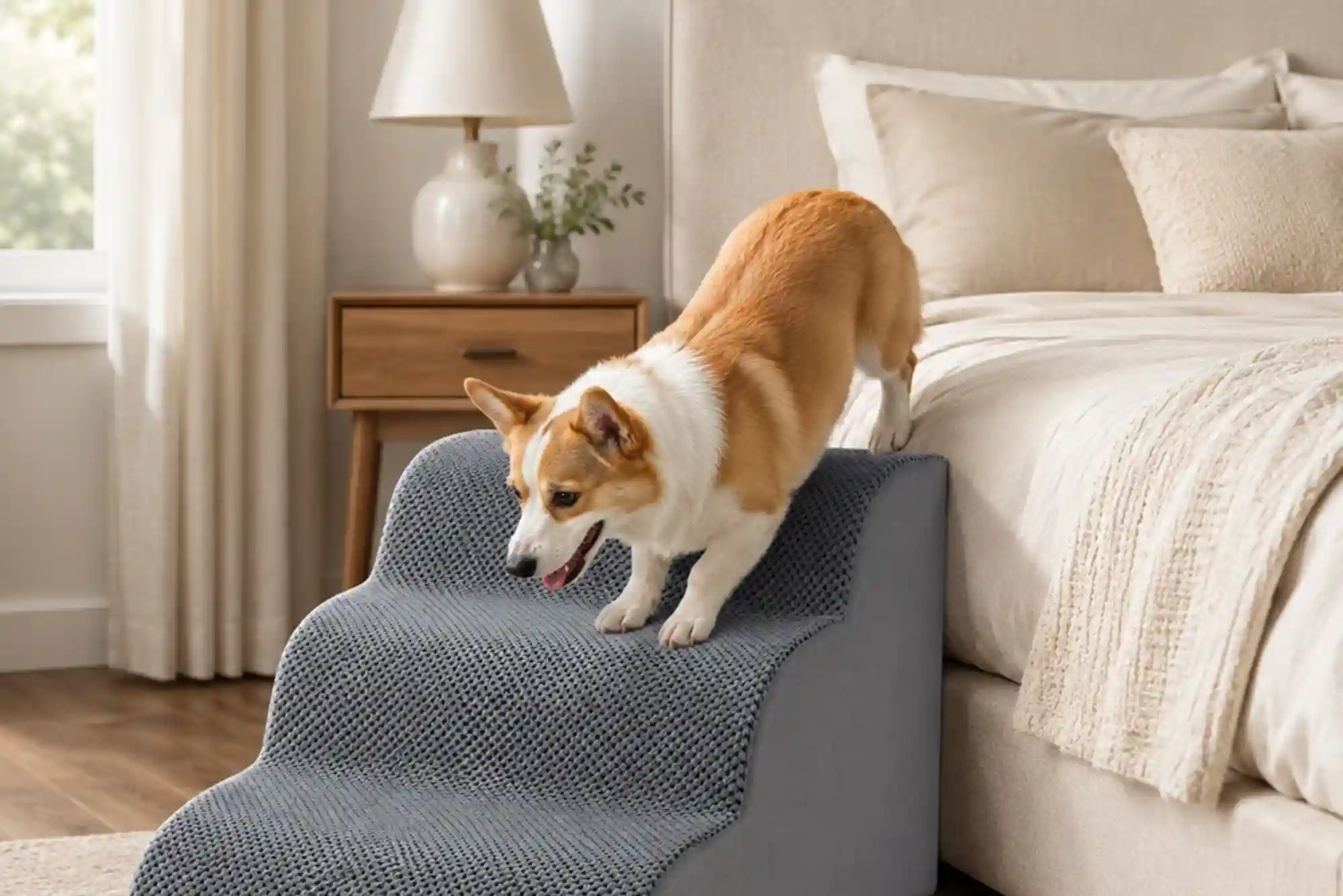
A bedroom ramp has different requirements from an SUV ramp. It usually needs to remain in place for regular daily use. Therefore, convenience and appearance can matter more than compact storage.
For a bed, consider a ramp that reaches the mattress without creating an excessively steep climb. A wide walking surface can also help larger dogs walk naturally.
Some dogs prefer ramps because they can walk continuously rather than stepping between individual platforms. However, every dog has different preferences. Veterinary guidance emphasizes that individual mobility needs should determine whether a ramp or stairs are more suitable.
If your bedroom does not have enough space for a long ramp, consider whether lowering the sleeping surface could provide a safer solution. A floor-level orthopedic dog bed may sometimes be more practical than forcing a senior dog to climb.
Best Orthopedic Dog Ramps for SUVs
SUVs create a different challenge because their entry height can be considerably greater than a sofa or bed. A ramp that works beautifully indoors may be too short for a vehicle.
For SUV use, folding or telescoping designs can be particularly practical. They can provide greater length during use while taking up less storage space afterward.
The Best Orthopedic Dog Ramps for Beds and SUVs: Preventing Joint Strain in Senior Dogs should also be easy for the owner to handle. A ramp that is extremely heavy may discourage regular use. Conversely, an overly lightweight ramp may feel unstable for a large dog.
Before every trip, make sure the ramp is positioned securely. The upper end should sit firmly against the vehicle, while the lower end should remain stable on the ground. Never assume that a ramp is secure simply because it worked previously.
Choosing the Right Ramp for Your Dog
Your dog’s size, age, mobility, confidence, and destination should influence your decision. A small senior dog may need a narrower and shorter ramp than a large Labrador. A dog with significant arthritis may require a gentler incline than a healthy older dog.
Breed characteristics can also matter. Some dogs are more vulnerable to back problems, and ramps can provide an alternative to repeated jumping. The American Kennel Club notes that ramps may be beneficial for dogs with arthritis and breeds prone to back problems, while emphasizing stable placement and gradual training.
Measure the destination before shopping. For a bed, measure from the floor to the mattress surface. For an SUV, measure the actual loading height. Then consider how much floor or driveway space the extended ramp will occupy.
How to Teach a Senior Dog to Use a Ramp
Even the Best Orthopedic Dog Ramps for Beds and SUVs may initially frighten a senior dog. A ramp is unfamiliar equipment, so rushing the process can create resistance.
Start by placing the ramp on a flat surface. Allow your dog to investigate it without pressure. Reward calm behavior around the ramp with praise or a favorite treat.
Next, encourage a few steps across the surface. Keep the sessions short and positive. Gradually increase the distance as your dog becomes comfortable.
The American Kennel Club recommends positive reinforcement and warns against pushing or pulling a reluctant dog onto mobility equipment.
Once your dog confidently walks across the ramp on the ground, introduce a small height. Increase the challenge gradually rather than immediately using the ramp at full SUV or bed height.
Common Mistakes to Avoid
One common mistake is buying a ramp based only on its advertised weight capacity. Capacity matters, but length and traction are equally important for senior dogs.
Another mistake is choosing a ramp that is too short for the vehicle. A steep incline can defeat the purpose of providing easier access.
Owners should also avoid placing ramps on slippery floors. Even a high-quality ramp can become dangerous if its base moves during use.
Finally, do not assume every new mobility problem is simply part of aging. Sudden reluctance to jump, weakness, limping, or difficulty standing deserves veterinary attention. A ramp can improve access, but it does not diagnose or treat an underlying condition.
Frequently Asked Questions
Are ramps better than stairs for dogs?
Neither option is universally better for every dog. Ramps provide a continuous incline and can be useful for dogs with arthritis or mobility limitations. Stairs may work better in situations where a long ramp would occupy too much space. PetMD recommends considering the individual dog’s condition and discussing the choice with a veterinarian.
What are the benefits of a dog ramp?
A dog ramp can reduce the need for jumping onto beds, furniture, and vehicles. It provides a gradual path that may be easier for senior dogs to navigate. Ramps can also be useful for dogs recovering from certain procedures or living with mobility problems.
Do dogs prefer steps or a ramp?
Dogs have individual preferences. Some dogs immediately accept ramps, while others feel more comfortable with steps. Training and surface texture can influence acceptance. A veterinarian can also help determine which option suits a dog’s mobility needs.
How long should a dog ramp be for an SUV?
The correct length depends on the vehicle’s loading height and your dog’s mobility. Higher SUVs generally require longer ramps to create a gentler incline. Measure the distance from the ground to the vehicle before purchasing rather than relying only on product photographs.
Conclusion
The Best Orthopedic Dog Ramps for Beds and SUVs: Preventing Joint Strain in Senior Dogs should provide more than simple convenience. The right ramp can help an aging dog access favorite places without repeatedly jumping onto elevated surfaces.